Why Fans Are Riding for Creators Harder Than Any Fictional Hero Right Now

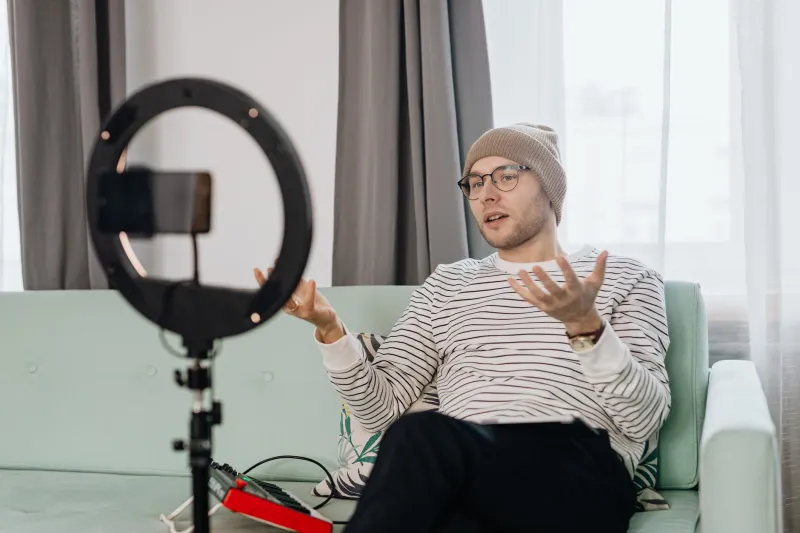
Photo by Photo by Vitaly Gariev on Unsplash on Unsplash
Think about the last time you genuinely lost sleep over a piece of entertainment. Was it a cliffhanger in a Netflix series? A Marvel post-credits scene? Or was it a creator you follow going quiet on social media for two weeks with zero explanation?
If it was the latter, you're not alone — and you're definitely not weird. Something seismic has shifted in how American audiences build emotional connections with entertainment, and the scoreboard right now has real human creators beating out fictional universes by a wide margin. Welcome to the parasocial era, where the line between fan and friend feels thinner than ever.
The Old Loyalty vs. The New Loyalty
For decades, fan culture was built around worlds — Star Wars, the MCU, Harry Potter, Game of Thrones. You didn't just watch these properties; you lived in them. You debated lore at lunch tables, bought the merch, lined up at midnight screenings. The emotional investment was real, even if the universe wasn't.
But here's what those franchises could never fully deliver: the feeling that the thing you love actually knows you exist.
Creators changed that equation completely. When someone like MrBeast drops a video, he's not just releasing content — he's continuing a conversation with an audience that's been tracking his journey since he was a teenager filming in his bedroom in North Carolina. When Emma Chamberlain talks about her anxiety or her coffee obsession, it doesn't feel like scripted dialogue. It feels like a friend oversharing on a road trip. And that intimacy? It's addictive.
Psychologists have a term for this — parasocial relationships — and it's been studied since the 1950s when researchers noticed TV audiences forming one-sided emotional bonds with on-screen personalities. But what's happening now with creators is a turbo-charged version of that old phenomenon. The feedback loop is tighter. Creators respond to comments, go live, share Stories, and post unfiltered moments that make the relationship feel genuinely reciprocal, even when it technically isn't.
Authenticity Is the New Special Effect
Here's a brutal truth for traditional entertainment: audiences have gotten really, really good at detecting inauthenticity. After years of PR-managed celebrity personas and algorithmically optimized studio releases, people can smell a manufactured moment from a mile away.
Creators, especially the ones who've built the most loyal fanbases, figured out early that the antidote to that skepticism is radical transparency. Not the performative kind — not the tearful "I'm taking a break" video that drops conveniently before a brand deal — but genuine, messy, unpolished honesty.
Take Hasan Piker or Pokimane, both of whom have navigated enormous public scrutiny by leaning into their actual personalities rather than constructing a safer, more palatable version. Their audiences don't just tolerate their flaws — they defend them fiercely, because the relationship feels earned. That's a level of brand loyalty that Disney's marketing budget can't manufacture.
The psychology here is worth unpacking. When someone shares a real struggle — burnout, a failed relationship, financial stress — our brains process it the same way we'd process a close friend confiding in us. Oxytocin gets involved. We feel connected. And once that neurological bond is formed, it's incredibly durable.
Case Studies in Creator Loyalty That Hit Different
Let's talk specifics, because the numbers don't lie.
When Logan Paul launched his PRIME energy drink, it sold out in hours — not because of an ad campaign, but because his fanbase had spent years watching him fail publicly, rebuild, and grow. They weren't buying a drink. They were supporting a journey they felt personally invested in.
Similarly, when Rhett & Link of Good Mythical Morning faced a wave of controversy over their past as Christian missionaries, their core audience's response was measured and nuanced — because those fans had literally grown up watching these two men evolve in real time. The relationship had depth that a fictional IP simply can't replicate.
Even on the smaller end of the scale, mid-tier creators with audiences in the hundreds of thousands routinely outperform major studio releases in terms of merchandise sell-through rates and crowdfunding success. The math is about depth of connection, not width of reach.
The Double-Edged Sword Nobody Talks About Enough
Before we crown the creator economy as the undisputed winner of fan culture, we have to be honest about the dark side — and there is one.
The same intimacy that makes parasocial relationships so powerful also makes them volatile. When fans feel that close to a creator, any perceived betrayal hits harder than a bad sequel ever could. A brand deal that feels out of character, a controversial opinion, a relationship that goes public — these things can trigger fan reactions that range from disappointed to genuinely unhinged.
Creators are essentially signing up to be in a relationship with millions of people simultaneously, and unlike a fictional character who can be written out of the story, they can't just disappear when things get complicated. The mental health toll of that dynamic is something the industry is only beginning to reckon with seriously.
For fans, the risk is different but equally real. Investing deeply in a real person means you can get genuinely hurt when they disappoint you, when they change, or when the parasocial fantasy collides with reality. That's not a small thing.
What This Means for the Future of Fandom
Here at MauroWorld, we believe fandom at its best is about genuine connection — with stories, with ideas, and yes, with the people who create things that matter to you. The shift toward creator-centered loyalty isn't a sign that storytelling is dying. It's a sign that audiences are hungry for something traditional entertainment has often failed to provide: the feeling that someone on the other side of the screen is actually, genuinely there.
The creators who'll build the most enduring communities aren't necessarily the ones with the best production value or the biggest platforms. They're the ones who understand that authenticity isn't a strategy — it's a commitment. And the audiences who thrive in this new landscape are the ones who can hold that parasocial connection with a little grace, enjoying the intimacy without losing sight of the fact that even the most transparent creator is still, ultimately, a human being doing their best.
That's not a reason to love them less. If anything, it's a pretty good reason to love them more.