Stop Chasing Clout: The Surprising Reason Niche Creators Are Quietly Getting Rich
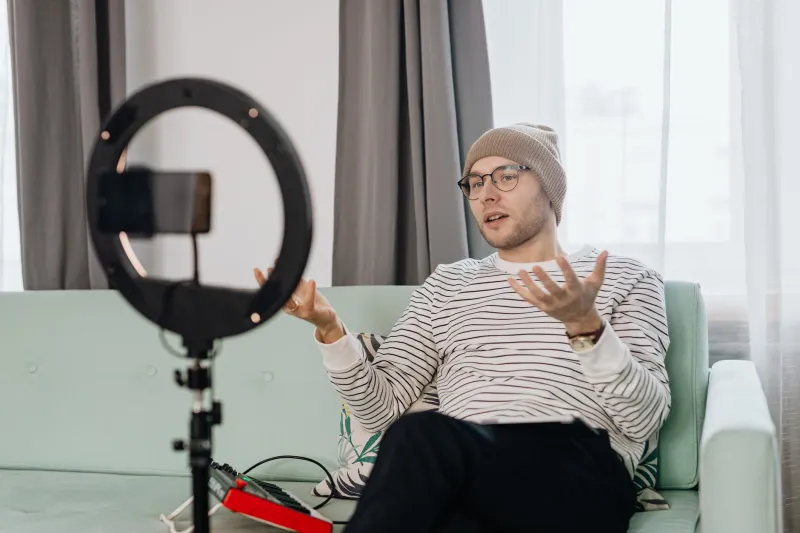
Photo: Creativeinds, CC0, via Wikimedia Commons
There's a version of creator success that looks like this: millions of followers, a trending post every other week, brand deals rolling in from every direction. It's the dream a lot of people are chasing. But there's another version — quieter, more sustainable, and honestly a lot more lucrative in the long run — that most people aren't talking about.
It's the creator who never went viral but somehow has a six-figure Patreon. The one whose YouTube channel peaked at 80K subscribers but whose merch drops sell out in hours. The one who turned down a collab with a massive brand because it didn't fit the vibe, and their audience respected them more for it.
Welcome to what some are calling the authenticity tax — the idea that staying true to your creative identity costs you short-term reach but pays off massively in long-term loyalty, revenue, and staying power.
The Paradox Nobody's Talking About
Here's the thing about chasing trends: it works. For a minute. A well-timed trending audio or a reaction video to whatever drama is popping off this week can absolutely spike your numbers. But the audience you pick up from a trend is, by definition, a trend audience. They're there for the moment, not for you.
Contrast that with creators who build around a specific, authentic point of view. A creator who makes content exclusively about restoring vintage American cars isn't going to hit 10 million followers overnight. But their 200,000 followers? Those people are obsessed. They share every video. They buy the branded gloves. They pay for the membership tier just to get early access to content. That's a different kind of math entirely.
Marketing researchers have a term for this: lifetime customer value. And in creator economics, the audience member who found you because your content genuinely resonated with their identity is worth exponentially more than the one who clicked because your thumbnail was in the trending tab.
The Psychology Behind Riding for Real Ones
Psychologists who study parasocial relationships — those one-sided emotional bonds fans form with creators, celebrities, and public figures — have found something interesting. The strength of a parasocial bond isn't really about how famous someone is. It's about how known they feel.
When a creator is consistent, specific, and honest about their perspective, fans start to feel like they actually understand that person. And once that happens, something shifts. It's no longer just content consumption. It becomes identity. Fans start to see the creator's wins as their wins. They defend them online. They recommend them to friends. They buy things not because of a discount code but because they want to support the person behind the work.
Compare that to the creator who pivots every three months based on what's popping. Their audience never quite knows what they're getting. The emotional investment stays shallow. And when a better trend-chaser comes along, the audience migrates without a second thought.
Real Creators, Real Proof
Look at someone like Emma Chamberlain, who built her brand on a distinctly unpolished, self-aware aesthetic at a time when everyone else was doing hyper-produced lifestyle content. She didn't follow the blueprint — she rejected it. And that rejection became the whole point. Her audience didn't just watch her; they related to her. That relational equity eventually powered everything from a major podcast deal to a coffee brand that sold out on launch day.
Or consider the wave of creators in spaces like historical fiction, tabletop gaming, or independent music criticism who've built quietly massive communities on Substack, Patreon, and YouTube. These aren't household names. But their audiences are so locked in that conversion rates — the percentage of followers who actually pay for something — blow mainstream creators out of the water.
The irony is real: the smaller, more specific, and more themselves a creator is willing to be, the more their audience is willing to spend.
What Brands Are Finally Starting to Understand
For a while, brand deals were purely a numbers game. Reach was everything, and micro-creators got overlooked in favor of whoever had the biggest platform. That's changing fast.
Brands are getting burned by massive influencer campaigns with terrible conversion. Meanwhile, a niche creator with 50,000 deeply engaged followers is moving product in ways that a 2-million-follower account can't touch. Engagement rate, not follower count, is the new metric that actually matters. And authentic creators — the ones whose audiences trust them — have engagement rates that trend-chasers can't fake.
Some estimates suggest that micro and nano influencers (generally defined as creators with under 100K followers) generate up to 60% higher campaign engagement rates than their mega-influencer counterparts. That's not a rounding error. That's a completely different business model.
The Cost of Inauthenticity
Here's where it gets real. Chasing trends isn't just a missed opportunity — it can actively damage a creator's brand. Audiences are sharp. They notice when someone suddenly pivots to crypto content because it was hot in 2021, or drops a collab that has nothing to do with anything they've ever talked about. The reaction is rarely neutral. It's disappointment, confusion, or worse — mockery.
Once an audience questions whether a creator is being real with them, that trust is incredibly hard to rebuild. And in a media landscape where trust is the whole product, losing it is a serious financial hit.
Staying True in a World Built to Distract You
None of this means creators should ignore their audience or never evolve. The best creators grow — they just grow from something rather than toward whatever's trending. There's a difference between creative evolution and creative whiplash.
The creators who are quietly winning right now? They've figured out how to stay anchored to a core identity while still experimenting at the edges. They know what their audience came for. They protect that. And everything else — the platforms, the formats, the brand deals — has to fit within that frame.
That's not limiting. That's actually the whole game. And for creators willing to play it that way, the payoff is real, lasting, and a whole lot more satisfying than a trending moment that disappears by Friday.