Odd Couples, Big Numbers: The Unexpected Creator Pairings That Are Breaking the Internet
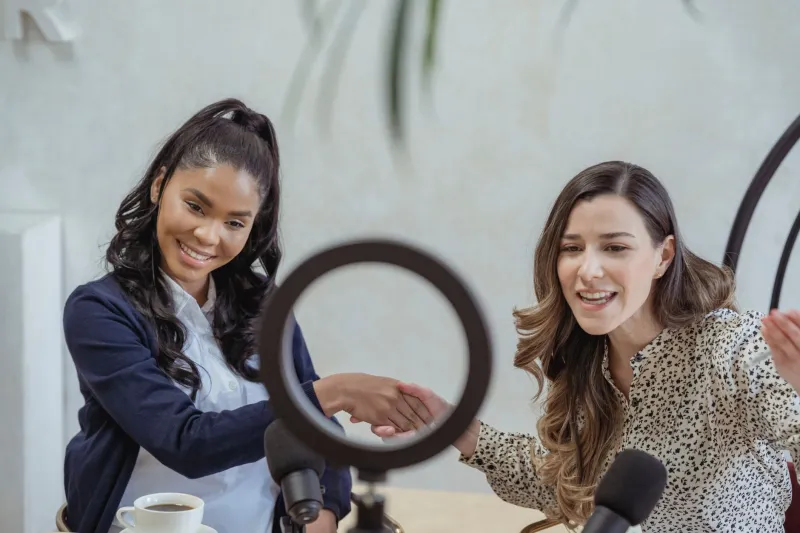
Something strange is happening in the creator economy, and honestly? It slaps harder than anyone predicted.
Forget the era of mega-collab announcements between two creators who already share 80% of the same audience. The move that's quietly reshaping how content gets made — and consumed — is something a lot more interesting. It's a 2-million-subscriber cooking channel sitting down with a niche welding educator who has 47,000 followers. It's a true crime podcaster co-writing an episode with a vintage fashion reseller. It's collabs that make you go, wait, how did these two even meet?
Welcome to the collaboration economy — where the most unexpected pairings are turning into the most addictive content.
Why "Audience Overlap" Is Becoming a Red Flag
For years, the conventional wisdom was simple: if you want a collab to perform, find someone whose audience mirrors yours. Same age range, same interests, same platform behavior. Makes sense on paper, right?
Except creators who've been grinding long enough are starting to realize that strategy has a ceiling. When two creators with nearly identical audiences collaborate, the content feels predictable. Fans already know both people, they already trust both people, and the surprise factor — which is basically rocket fuel for engagement — is completely gone.
Contrast that with a collab between a Nashville-based DIY furniture builder and a Korean-American food blogger. On the surface, zero overlap. In practice? The DIY crowd gets introduced to an entirely new world. The food community sees their favorite creator in a totally unfamiliar context. The content practically markets itself because nobody saw it coming.
This is what's driving the shift. Unpredictability is the new virality.
The Behind-the-Scenes Reality Nobody Talks About
Here's the part that doesn't make it into the YouTube vlog or the Instagram BTS reel: most cross-niche collabs are hard to pull off, and a huge percentage of them never make it past the DM stage.
For starters, there's the negotiation layer. When two creators from wildly different audience sizes try to work together — say, someone with 5 million followers and someone with 80,000 — the conversation about who gets what gets complicated fast. Does the smaller creator get paid a flat rate? Does the bigger name get final cut? Who owns the footage? These aren't just logistical questions; they're relationship questions, and they can sink a collab before a single camera rolls.
Then there's the chemistry problem. Some creators are magnetic together on screen. Others are perfectly nice humans who generate absolutely zero spark when placed in the same frame. The audience feels that immediately. You can't fake it, and no amount of editing can manufacture the kind of genuine energy that makes a collab worth watching.
Creators who do this well tend to have one thing in common: they treat the collab like a creative project first and a marketing play second. The ones who approach it purely as a numbers game — your audience plus my audience equals our audience — almost always produce content that feels transactional and flat.
The Financial Models Underneath It All
Let's talk money, because this is where things get genuinely fascinating.
Traditional brand sponsorships work on reach metrics. A brand pays X dollars for Y impressions, and everyone goes home. Creator-to-creator collaborations operate on a completely different economic logic — one that's still being figured out in real time.
Some cross-niche collabs are purely organic, built on genuine mutual interest and a handshake agreement to split whatever revenue the content generates. Others involve formal contracts, especially when there's a meaningful gap in audience size or when a brand is funding the partnership. A growing number of creator collabs now involve what insiders are calling "audience equity" arrangements — where a smaller creator accepts a lower upfront payment in exchange for a percentage of the long-term subscriber or follower growth their appearance generates for both channels.
There's also the merchandise angle. A collab between a streetwear creator and a video game content maker that might look random from the outside can actually be a calculated product launch — a limited drop that appeals to both fan bases and sells out in hours precisely because it exists at the intersection of two worlds.
The economics are messy and there's no universal standard yet. But that's also what makes this space exciting. The rules are still being written.
When It Goes Wrong (And It Does)
Not every unexpected pairing becomes a masterclass in creative synergy. Some of them crash, and the wreckage is very public.
The most common failure mode? A collab that was clearly engineered by management rather than born from actual creative interest. Audiences have finely tuned radar for this stuff. The moment a collab feels like a PR strategy rather than two people who genuinely wanted to make something together, the comments section turns brutal.
There's also the values misalignment issue. When two creators from different niches come together, they're also bringing their communities' expectations with them. If those communities have fundamentally different vibes — different senses of humor, different sensitivities, different cultural reference points — the content can alienate both fan bases simultaneously. That's a lose-lose that takes months to recover from.
And then there's the timing problem. A collab that would've been electric six months ago can land completely flat if one creator is in the middle of a controversy or if the cultural moment has moved on. The window for certain pairings is genuinely narrow, and missing it is its own kind of painful.
Why Fans Are Actually Addicted to This
Here's the thing that might be the most underrated part of the whole conversation: audiences love the unpredictability of creator collabs in a way they don't love almost anything else in the content landscape right now.
Streaming has made so much entertainment feel algorithmic and safe. You know what you're getting when you press play on another Netflix procedural. But a collab between two creators you follow for completely different reasons? That's genuinely uncharted territory. You don't know how they'll interact. You don't know if it'll be awkward or electric. You don't know what version of your favorite creator you're going to see.
That uncertainty is valuable. It creates appointment viewing in an era where almost nothing does.
Creators who understand this are starting to treat collabs less like content and more like events. They're building anticipation deliberately, letting audiences speculate, and then delivering something that either confirms or totally subverts expectations. Either way, people are talking.
The Takeaway for Anyone Paying Attention
The collaboration economy isn't a trend. It's a structural shift in how creative reach gets built. The creators who are going to dominate the next few years aren't necessarily the ones with the biggest individual audiences — they're the ones who are best at identifying unexpected creative partners, building genuine relationships across niches, and making content that couldn't exist any other way.
At MauroWorld, we've always believed that the most interesting creative work happens at intersections. And right now, the intersection between two creators you'd never expect to see together might be the most exciting place in entertainment.