Unfiltered and Unstoppable: Why Dropping the Act Is the Smartest Move Creators Are Making Right Now
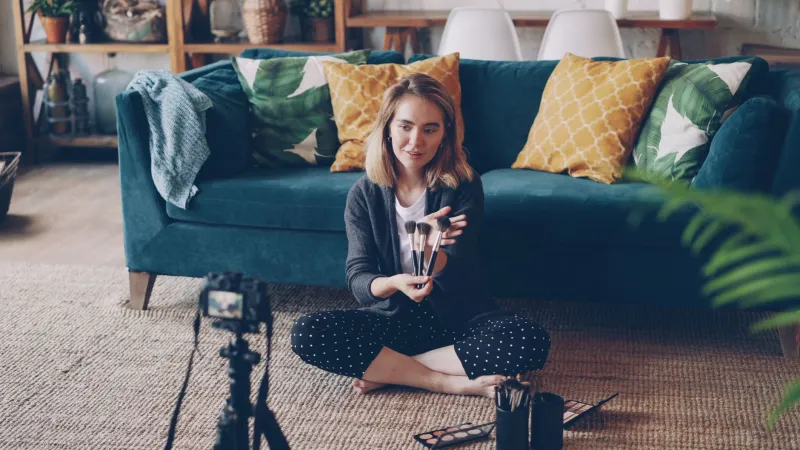
There's a weird thing happening across YouTube, TikTok, and Instagram right now. The creators putting out perfectly lit, meticulously scripted, algorithm-optimized content are getting scrolled past — while the ones filming themselves crying in a parking lot or posting a shaky, unedited rant at midnight are racking up millions of views and somehow growing faster than ever.
It sounds backwards. And honestly? It kind of is. But once you dig into why it's happening, it makes complete sense.
Welcome to what some people in the space are calling the authenticity paradox — the idea that the harder you work to look real, the less real you actually seem. And the moment you stop performing realness and just... are real? That's when the audience locks in.
The Internet Got Really Good at Spotting a Script
Audiences in 2024 have been marinating in content their entire lives. Gen Z especially grew up watching YouTube before they could read. They've absorbed thousands of hours of creator content, and somewhere along the way, their internal detectors got razor sharp. They can feel a rehearsed "spontaneous" moment from a mile away. They know when a "day in my life" vlog has been storyboarded. They sense when the emotional confession at the top of a video is actually just a retention hook.
That collective media literacy has completely changed what lands. The production value that once signaled credibility now sometimes signals distance. It tells the viewer: this person has a team, a strategy, and a brand deal pipeline — and you're just part of the funnel.
What cuts through instead? Texture. Mess. The stuff that wasn't supposed to make the final cut.
Case Study: The Creator Who Accidentally Went Viral by Quitting
Think about the pattern you've probably seen play out more than once. A creator who's been grinding for years — consistent uploads, solid numbers, decent engagement — finally hits a wall. Burnout, personal stuff, creative exhaustion. They post something raw and unplanned, maybe a voice memo turned into a video, or a text-on-screen post admitting they don't know what they're doing anymore.
And it explodes.
It happened with a wave of lifestyle creators around 2022 and 2023 who publicly stepped back from their "aesthetic" and just started talking to the camera like a human being. No ring light. No b-roll. No sponsored segment transition. Just them, saying something true.
The comments filled up not with sympathy, but with recognition. People weren't just feeling bad for the creator — they were saying this is the most real thing you've ever posted and I've been waiting for you to be like this. The audience had been there the whole time, waiting for the mask to slip.
Why Vulnerability Converts Better Than Virality
Here's the thing about a viral moment: it brings people in, but it doesn't necessarily keep them. A funny clip gets shared, the numbers spike, and then most of those new viewers evaporate. They came for the bit, not for you.
Vulnerability works differently. When someone shares something genuinely uncomfortable — a failure, a fear, a moment of confusion about their own direction — the people who stick around after that are invested. They're not following the content anymore. They're following the person.
That's the real currency shift happening right now. Parasocial connection, the kind where a viewer genuinely feels like they know you, used to be built slowly over years. But an honest, unguarded moment can accelerate that bond dramatically. It's like skipping several chapters of a friendship and landing somewhere much more real.
And from a pure business standpoint, that kind of audience is worth a lot more. They buy the merch. They show up to the live events. They defend the creator in the comments when drama hits. They're not casual consumers — they're a community.
The Trap of Performing Authenticity
Here's where it gets complicated, though. Once creators figure out that vulnerability works, some of them start manufacturing it. The "no makeup, messy bun, I need to be honest with you guys" format becomes its own genre. The tearful confession video gets a thumbnail and a clickbait title. And suddenly, what was supposed to be the antidote to performance becomes... another performance.
Audiences catch on to this too. There's a specific kind of cynicism that kicks in when the "raw" moment feels too convenient, too timed around a controversy or a comeback arc. It reads as manipulation wearing the costume of openness.
The creators who actually win long-term aren't the ones who deploy vulnerability strategically — they're the ones who are simply less guarded as a baseline. It's a personality trait more than a content strategy. They share the process, not just the outcome. They talk about the uncertainty while they're still in it, not in a polished retrospective three months later.
What Behind-the-Scenes Actually Means Now
Behind-the-scenes content used to mean a blooper reel or a studio tour. Now it means something deeper — it's the thinking out loud, the half-formed idea, the moment before the creator knows how the story ends.
Some of the most magnetic content online right now is essentially just a person working through something in real time. A creator figuring out whether to leave their platform. A musician sharing a song that isn't finished yet and asking for honest feedback. A filmmaker posting the version of the project they scrapped and explaining why it wasn't working.
That kind of content invites the audience into the creative process rather than just presenting the polished result. And when people feel invited in, they show up differently. They become collaborators in spirit, even if they're just watching.
So What Does This Mean for Creators Right Now?
If you're building something — a channel, a brand, a community — the takeaway here isn't "stop trying" or "post bad content on purpose." It's more nuanced than that.
It's about closing the gap between who you are when the camera is off and who you are when it's on. It's about trusting that the audience you actually want is looking for you, not the most optimized version of a creator archetype.
The creators who are winning by being unfiltered aren't winning despite the lack of polish. They're winning because the lack of polish is proof that something real is happening. And in a feed full of content that's been engineered within an inch of its life, real is the rarest thing of all.
At MauroWorld, we talk a lot about what it means to build something that actually connects — not just something that performs. And right now, the data, the culture, and honestly just the vibe all point in the same direction: people are hungry for creators who show up as themselves, even when that self is uncertain, tired, or still figuring it out.
Especially then, actually.